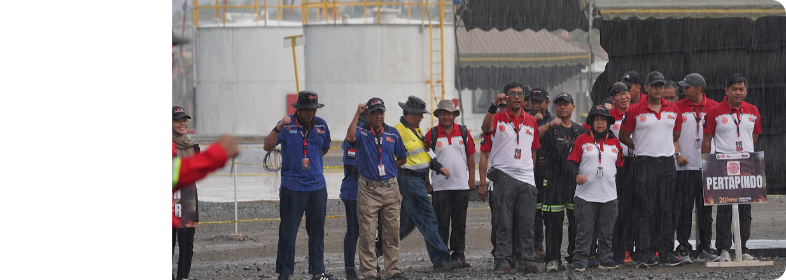
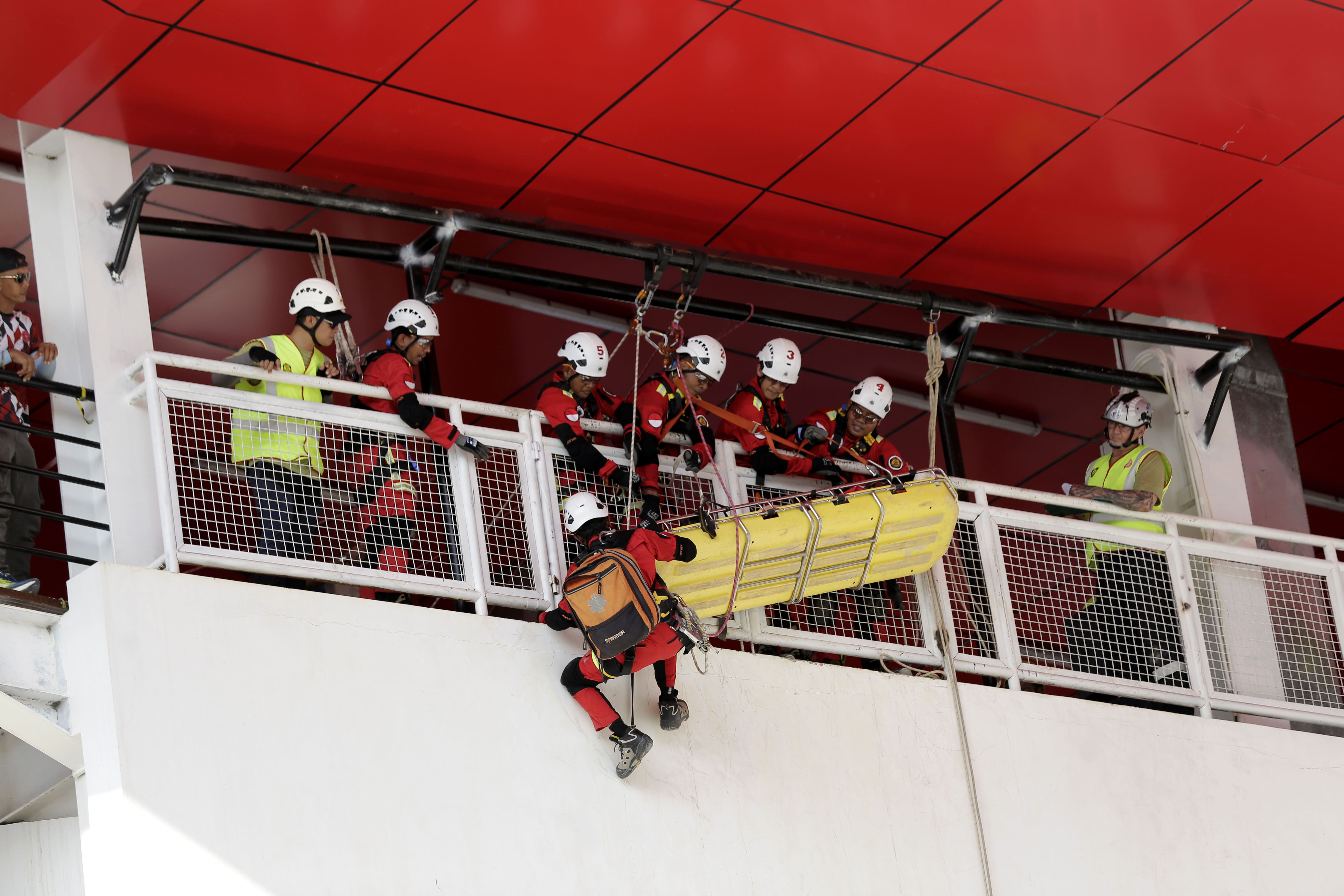
On October 25, 2024, 21st Indonesian Fire & Rescue Challenge (IFRC) 2024 carried out one of the tense challenges, namely Challenge 02: High Angle Rescue (HAR). This challenge tests participants' skills in carrying out rescues in very dangerous steep or high terrain. In challenge this, rescue teams must be able to work precisely and quickly, utilizing techniques rigging and special equipment to evacuate victims from hard-to-reach locations.
Understanding and Objectives of Challenge High Angle Rescue (HAR)
High Angle Rescue (HAR) is a rescue challenge performed in areas of extreme height, such as cliffs, high-rise buildings, or structures others have steep slope angles. Participating teams are required to use rigging techniques and equipment custom savior to reach victims who are in dangerous locations
The main purpose of HAR is to test the rescue team's ability to overcome dangerous terrain and carry out a safe evacuation. Some of the skills tested in challenge these include:
Technique Rigging: Using ropes and other supporting equipment to achieve victims at heights or steep terrain.
Team Safety and Casualty: Ensures that the evacuation process is carried out safely, without making things worse victim's condition or endanger the rescue team.
Speed and Precision: Save the victim in time as short as possible, without reducing safety or the quality of rescue actions.
Under extreme conditions, challenge this tests courage, precision and coordination between team members in navigating difficult terrain and carrying out rescues in very dangerous places. Every movement must be carefully calculated because a wrong step can result in fatal.
HAR Simulation: Courage and Collaboration in Height
Challenge HAR on IFRC 2024 is not just about technical skills, but also about how teams work together to face challenging situations. In the simulation held at Garuda Rescue Nusantara (GRN), participants must prepare rigging equipment and evacuation techniques that can be used in very risky conditions. With strong winds and steep terrain, participants had to stay focused and work in less than ideal conditions, ensuring the safety of victims and rescue teams.
Teams who succeed in ChallengeHAR shows excellent communication skills, tight coordination, and highly proven technical skills. They must work with speed and precision, using ropes and other techniques to lower victims safely, while considering all risk factors in extreme environments.
Aspects Tested in Challenge HAR
Technical Skills: Participants must demonstrate proficiency in using various types of ropes, safety equipment, and descent or evacuation techniques suitable for steep terrain. Mistakes in using tools or techniques can risk endangering the victim or the team.
Safety First: This challenge emphasizes the importance of safety. All participating teams are trained to prioritize safety, both for rescued victims and for teams working at heights. Proper safety procedures are something that must be adhered to in every rescue step.
Team Collaboration Skills: Success in High Angle Rescue relies heavily on the entire team's ability to work together in stressful situations. Each team member must coordinate well to achieve a common goal, saving victims safely.
Witnessing the Courage of Heroes in Height
As seen in IFRC 2024, participants involved in Challenge 02: High Angle Rescue prioritize safety and courage in every step they take. Not only technical skills, this challenge tests the mental toughness and cohesion of teams who face dangerous terrain and limited time.
Peparticipants who successfully completed HAR not only proves their ability to handle accidents at height, but also provides inspiration about the importance preparation, courage and expertise in saving lives in extreme conditions.